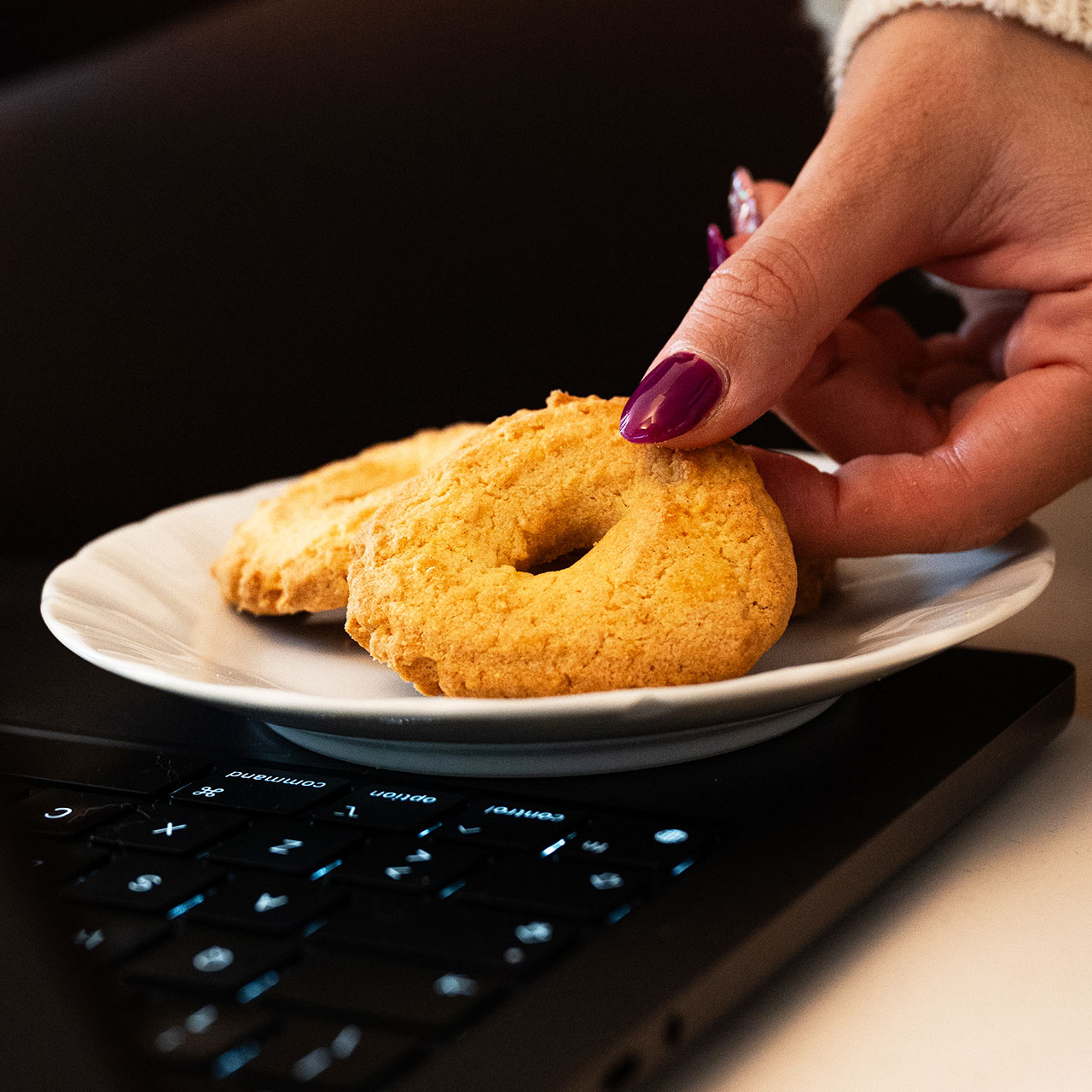
Piedmont, a land of hills and vineyards, is also home to a rich and varied confectionery tradition.
Piedmontese sweets have their origins in peasant tradition and are famous for their use of genuine, local ingredients. Each sweet tells a story, passed down from generation to generation, a story of passion, art, and culture. From the famous Krumiri of Casale Monferrato, with their unmistakable half-moon shape, to the gluttonous Lady Kisses of Tortona and to the fragrant Paste di Meliga. Each dessert is a sensory journey that will take you to the heart of Piedmont, allowing you to savour the authentic flavours that characterise the pastries of this region, nestled at the foot of the Alps.
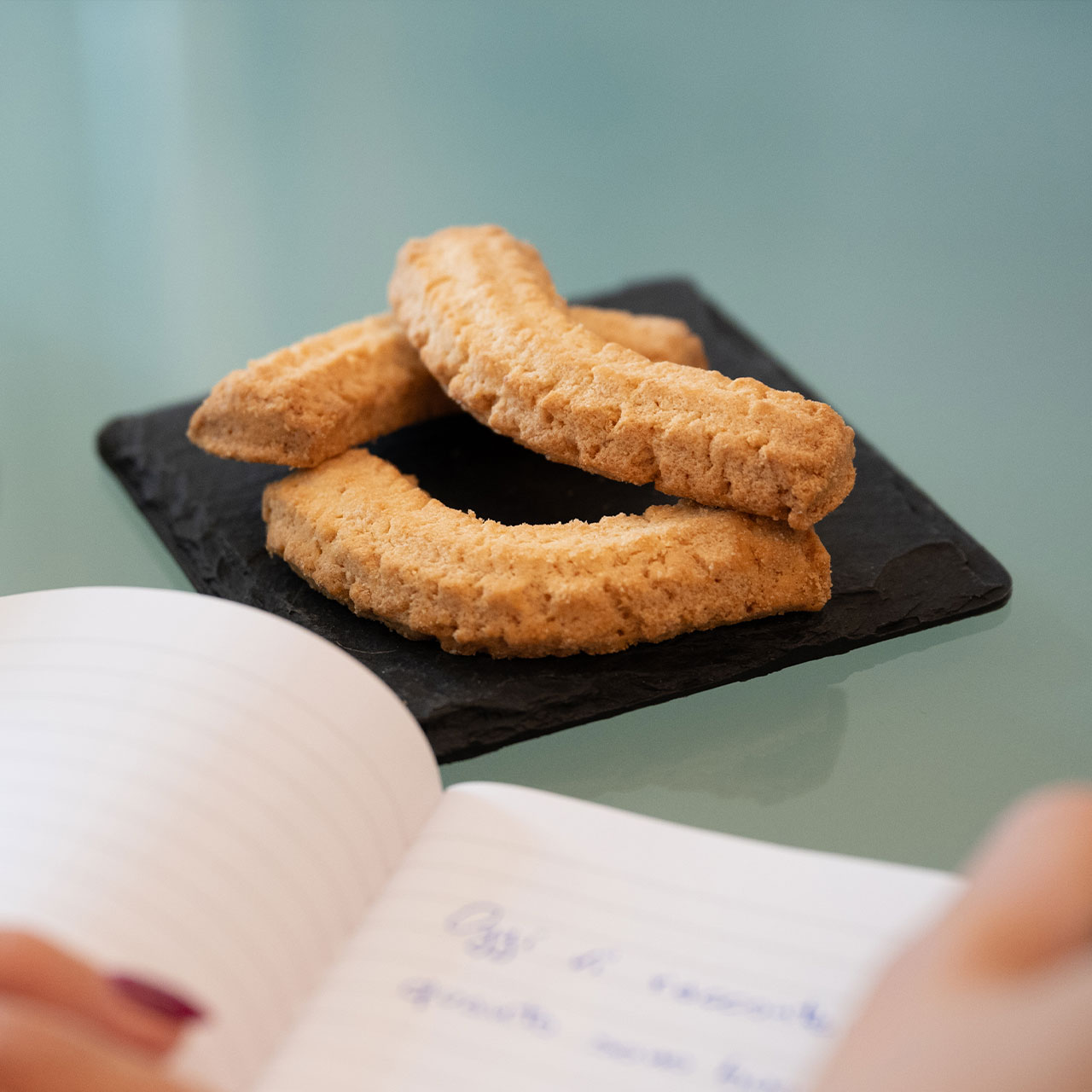
Krumiri are an authentic jewel of Piedmontese pastry, born in Casale Monferrato in 1878. Their characteristic crescent shape is a tribute to the moustache of Vittorio Emanuele II, the first King of Italy.
Prepared with simple and wholesome ingredients such as flour, butter, sugar and eggs, Krumiri boast a rich, buttery flavour with a crumbly texture. Their traditional recipe does not involve the use of yeast, which contributes to their distinctive crispness. Perfect to enjoy with a cup of tea or coffee, Krumiri are a symbol of Piedmontese pastry-making and an example of how the simplicity of ingredients can create a product of great quality and tradition.
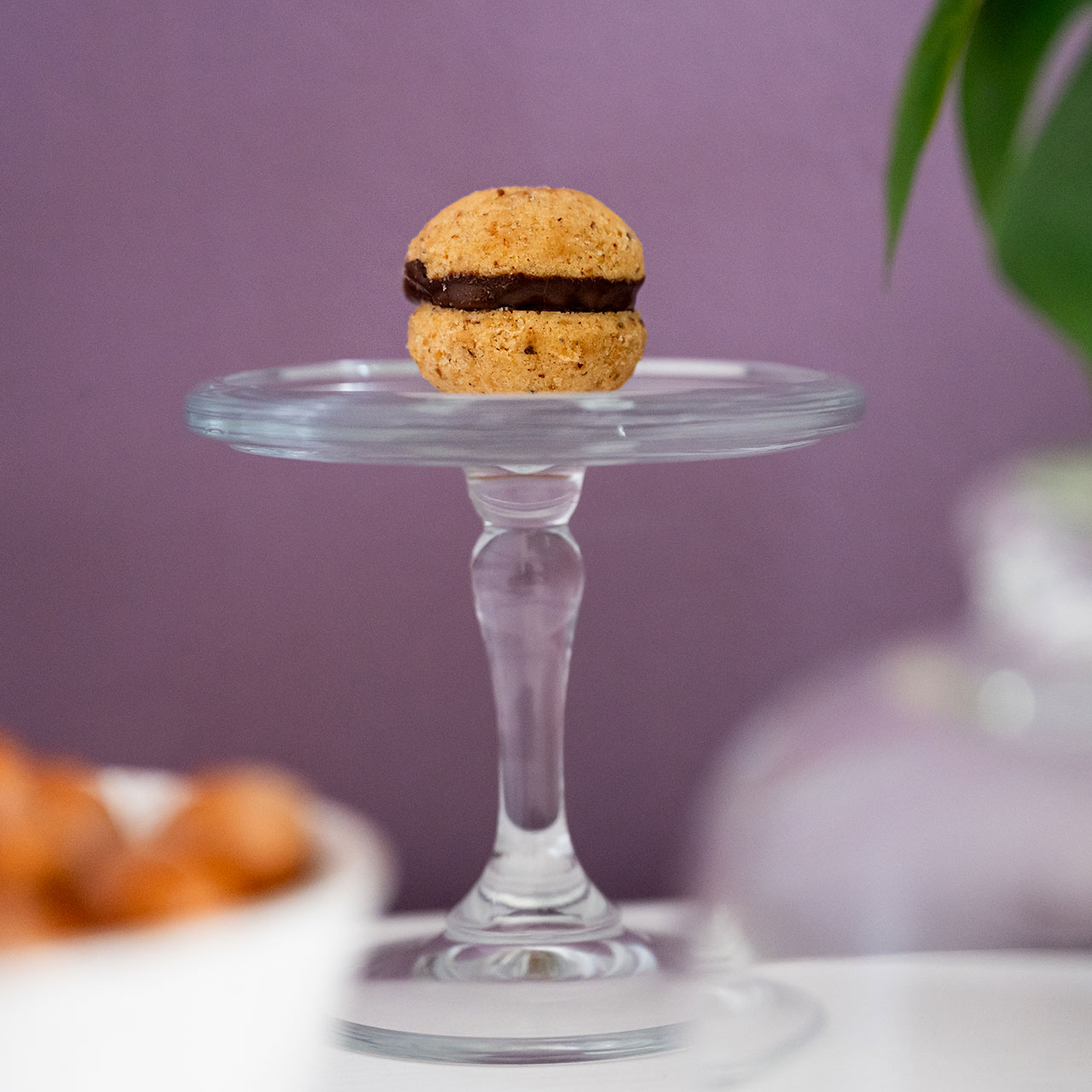
Baci di dama are small masterpieces of simplicity and taste, originating in the city of Tortona.
Composed of a few simple ingredients such as hazelnuts, sugar, butter and eggs, baci di dama (lady's kisses) owe their name to two shells of dough joined by a veil of dark chocolate, resembling two lips ready to kiss. Hazelnut, the undisputed protagonist, gives the cookie an unmistakable aroma and a slightly grainy texture. The dark chocolate, on the other hand, adds a bitter note that perfectly balances the sweetness of the hazelnuts.
Legend has it that Baci di Dama were created in the mid-1800s at the request of King Vittorio Emanuele II to taste a new dessert. Since then, these little treats have become a symbol of Piedmontese pastry, winning over the palates of young and old alike.
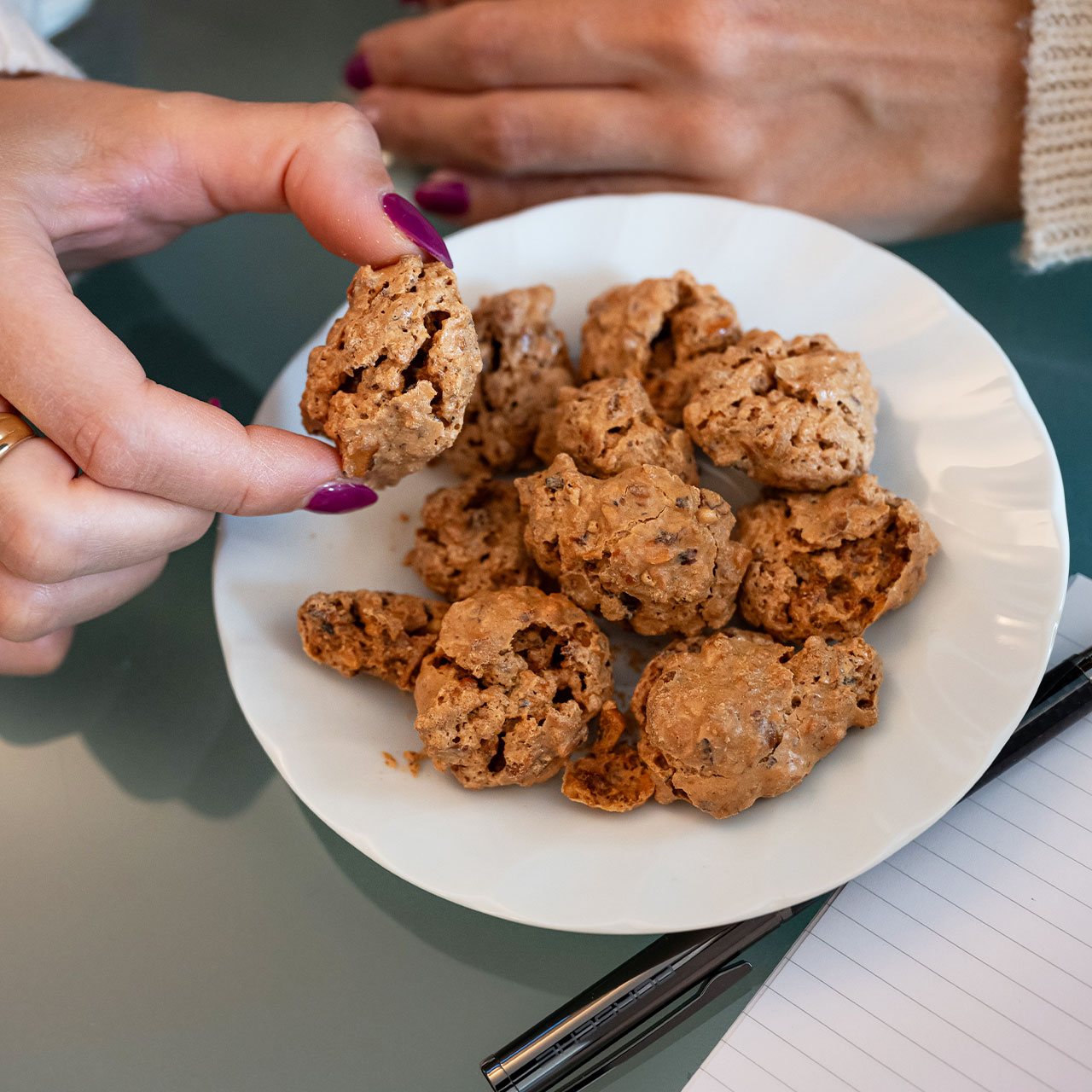
Brutti ma buoni are dry, irregularly shaped cookies made from a dough of Toasted hazelnuts, sugar, egg white. Known in dialect as brut e bon,they were created by a pastry chef from Varese who moved to Borgomanero, and today they are recognised as the city's typical sweets.
Made with a few simple ingredients, the brutti ma buoni they owe their name to their rustic, irregular appearance and their delicious taste.. Their main characteristic is their fragrant texture on the outside, with a strong nutty aroma, and soft on the inside. They are a perfect combination of simplicity and goodness, a sinful treat that never disappoints.
The predominant flavour is that of toasted hazelnuts, which gives the biscuit a toasted and slightly bitter note. The sugar balances the slight bitterness of the hazelnuts, creating a perfect balance between sweet and bitter.
Le paste di meliga are delicious shortbread biscuits, typical of Piedmont, characterised by the use of fioretto corn flour, called ‘melia’ or ‘meliga’ in the Piedmontese dialect.
Meliga biscuits have a fascinating history dating back to the mid-19th century when, during a period of wheat scarcity, Piedmontese bakers, with their ingenuity, replaced part of the wheat flour with corn flour., creating a dessert that, besides satiating hunger, soon became a symbol of ingenuity and adaptation.
Made from simple ingredients such as cornflour, plain flour, butter, eggs and sugar, meliga biscuits have an intense, rustic flavour with a slightly nutty note. It is their slightly crunchy texture, given by the cornflour, that makes these biscuits unique and unmistakable.